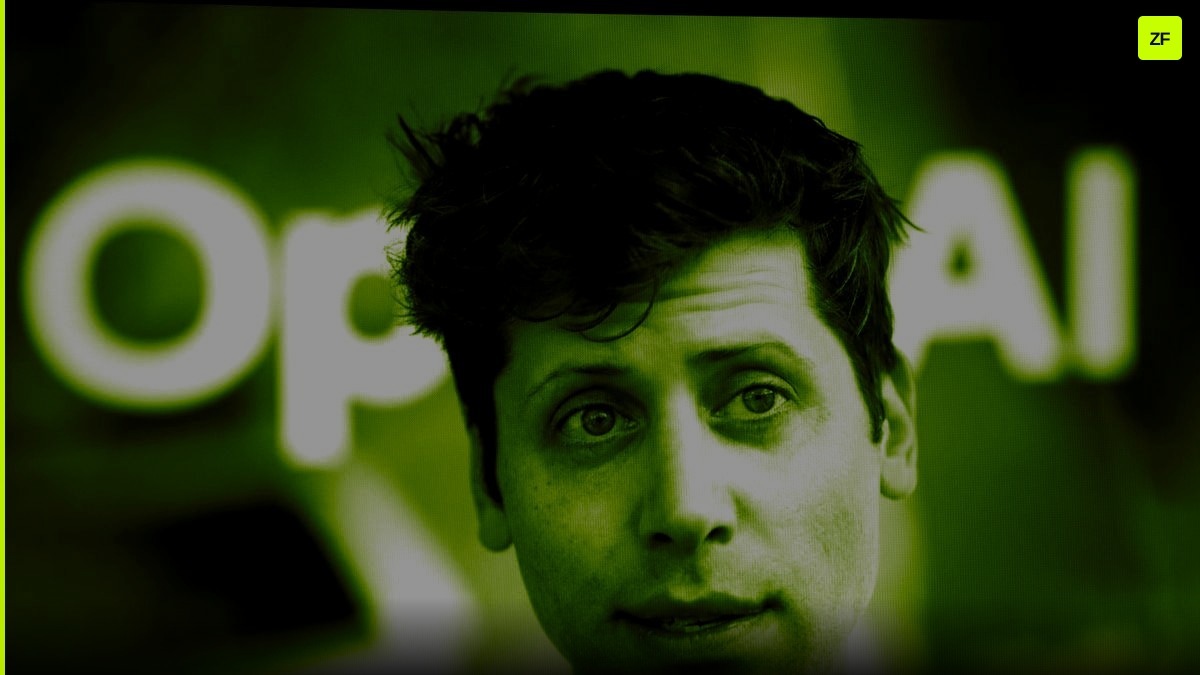
Sam Altman is the most commercially successful AI executive in history, and possibly the most consequential technology operator of the decade. Under his leadership, OpenAI grew from a research laboratory into a $157 billion company with 400 million weekly active users, a $3.4 billion annual revenue run rate, and a relationship with Microsoft that has permanently restructured competitive dynamics across cloud computing, enterprise productivity software, and the global knowledge economy. He did not invent the Zero Human Company. He put the tools for building one into the hands of every knowledge worker on earth.
The Business
OpenAI's scale is without precedent in AI. ChatGPT reached 100 million users faster than any consumer application in history; it reported 400 million weekly active users in early 2025. Annual revenue for 2024 reached approximately $3.4 billion; the company is targeting $11.6 billion for 2025. OpenAI's valuation hit $157 billion following a $6.6 billion funding round in late 2024 — the largest venture capital round in history at the time.
The commercial architecture is a three-layer stack. First, API revenue from enterprise developers and organisations building on GPT-4o, o1, and o3 models — the largest AI developer ecosystem by volume. Second, ChatGPT subscriptions: the consumer tier at $20 per month, the Teams plan, and the Enterprise plan, each targeting a different segment of the knowledge economy. Third, the Microsoft partnership: an investment of more than $13 billion has placed GPT-4 capabilities inside Microsoft 365, used by 345 million commercial seats globally, making OpenAI's AI functionality the default option in the software that runs corporate knowledge work.
The Stargate initiative — a $500 billion US AI infrastructure investment announced in January 2025 with SoftBank and Oracle, backed by direct US government support — will add sovereign compute capacity that removes OpenAI's dependency on third-party cloud providers and ensures Altman's model development roadmap is not constrained by GPU allocation politics. The first tranche of $100 billion was committed for immediate deployment across data centres in Texas.
The Vision
Altman's stated goal is artificial general intelligence: AI that can perform any intellectual task a human can perform, at or above human level, reliably and at scale. His public timeline is aggressive. In early 2025 he stated his belief that AGI could arrive within the current decade, and that the commercial implications of that threshold would be more significant than any technology transition in history.
In practice, the near-term strategy is embed-and-compound: place OpenAI's models deeply enough inside enterprise workflows that switching costs become structurally prohibitive. GPT-4 inside Microsoft 365 is the canonical example. Every spreadsheet, document, presentation, and email in corporate America will, within three years, have AI-assisted authoring and analysis baked into tools employees already use daily. The conversion from optional AI feature to default professional infrastructure is the transition Altman is engineering — and once it completes, every alternative AI provider is competing for residual market share, not primary workflow.
The o-series reasoning models — o1, o3 — represent Altman's thesis that AI capability will continue scaling significantly beyond current GPT-4 class performance. Early benchmark results on o3 suggest reasoning capabilities that exceed human expert-level performance on a range of professional evaluations. The commercial and economic implications of AI systems routinely performing at above-human expert level in knowledge work are, by any credible analysis, transformational.
In Their Own Words
"The economic growth that AI will enable over the next decade will be staggering. This is going to be the most important technology transition we have ever seen — more important than the internet, more important than mobile."
— World Economic Forum, Davos, January 2024
"My goal is to make AGI real — and to ensure that when we do, the benefits are broadly shared rather than captured by a small number of people or organisations. That is the actual mission. Everything else is execution."
— Stanford HAI panel, 2024
"ChatGPT is the fastest-growing consumer application in history. That tells us something important: people were ready for this technology. They had been ready for it for longer than we realised."
— OpenAI all-hands, 2024
"Stargate is the largest coordinated infrastructure investment in AI history. The United States will lead the AI era — but only if we build the compute infrastructure now, at the speed this moment requires."
— White House press conference, January 2025
The View from the Boardroom
No AI CEO generates as much strategic commentary from capital markets as Altman. The combination of ChatGPT's consumer penetration, the Microsoft partnership's structural depth, and the AGI timeline claims creates a set of analytical challenges that Morgan Stanley, Goldman Sachs, and the major strategy firms are still working through.
CAPITAL MARKETS
"The Microsoft relationship is the most durable competitive advantage in the AI sector. 345 million commercial Microsoft 365 seats is not a partnership — it is distribution infrastructure that no competitor can replicate on any realistic timeline. Every productivity workflow that adopts Copilot is a compounding switching cost."
— Morgan Stanley Technology Equity Research, 2025
GEOPOLITICAL STRATEGY
"The Stargate announcement was a masterclass in simultaneous stakeholder capture: it locked in US government support, secured future sovereign compute, signalled national AI leadership to geopolitical audiences, and positioned every competitor as playing structural defence. Altman made a $500 billion infrastructure commitment look like a routine press release."
— Bain & Company, AI Practice Senior Partner, 2025
MANAGEMENT STRATEGY
"Altman's distinctiveness is not technical judgment — it is the capacity to make every stakeholder class believe that OpenAI's success is synonymous with their own interests. Regulators, investors, enterprise buyers, governments, and consumers have all, at various points, been aligned behind OpenAI's mission framing. That is a level of political capital that very few technology executives have ever accumulated."
— Harvard Business School, Technology Strategy unit, 2025
The principal risk identified by analysts is the November 2023 board crisis, in which Altman was briefly removed by OpenAI's non-profit board before being reinstated within five days. The episode exposed structural governance tensions between OpenAI's non-profit mission and its commercial ambitions that have not been fully resolved. The $157 billion valuation and the Stargate infrastructure commitments make resolution urgent.
The ZHC Verdict
Altman's contribution to the Zero Human Company is mass distribution. He has taken AI reasoning capability from research laboratories to 400 million weekly users, and embedded it inside the productivity infrastructure that runs corporate knowledge work globally. The implications are already visible in workforce data: white-collar productivity is being restructured, entry-level analytical roles are being automated, and the demand for AI-augmented work is reshaping hiring in law, consulting, finance, engineering, and medicine.
AGI, if Altman's timeline is accurate, is the endpoint of the ZHC thesis: AI capable of performing any intellectual function at human level or above, available as a service at marginal cost. Every organisation that has not begun the operational transition to AI-augmented work by the time that threshold arrives will face the same existential disruption that internet-resistant businesses faced in the early 2000s — but compressed into a much shorter window.
The question Altman poses to every board is temporal: when does this transition happen, and are you positioned for it on your own terms, or on someone else's?
ZHC Readiness Score: 8/10. The architect of mass-market AI deployment — the executive who put the Zero Human Company's tools in every knowledge worker's hands, and is now building the infrastructure to make the endpoint inevitable.