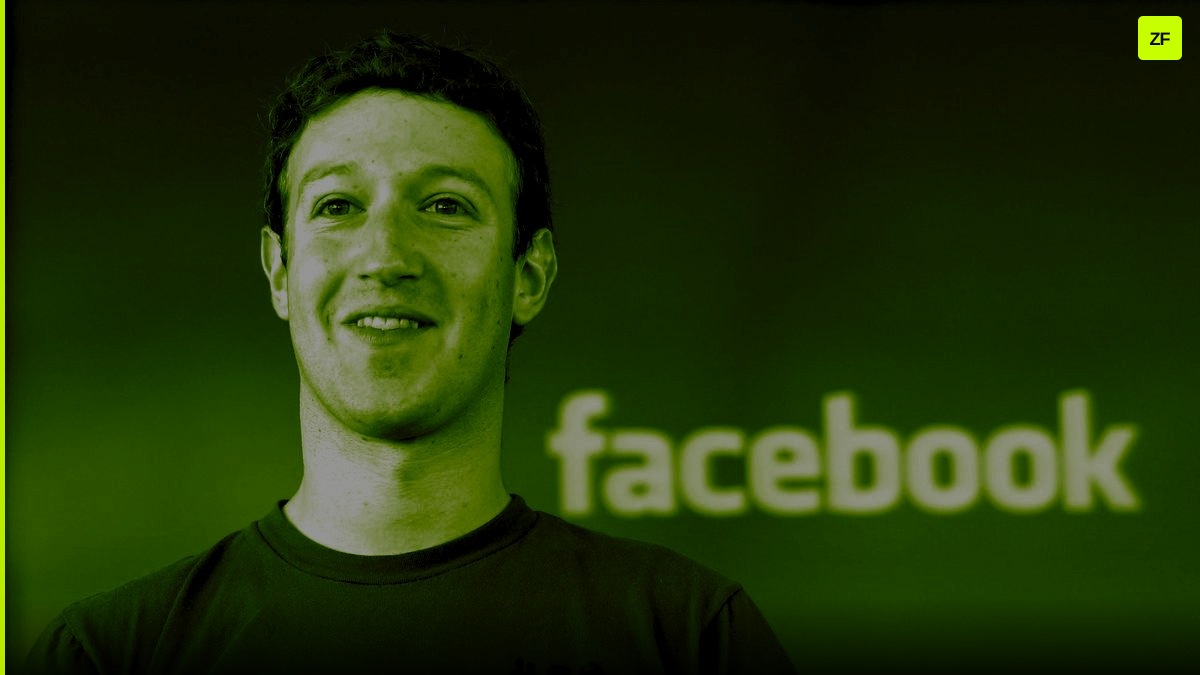
Mark Zuckerberg's transformation from embattled social media CEO into one of the world's most significant AI infrastructure operators is the underappreciated business story of the 2020s. Having absorbed the punishment of the 2022–23 downturn — more than $60 billion written off on Reality Labs, a 25% headcount reduction, and the most severe stock decline in the company's history — Meta emerged leaner, dramatically more profitable, and in possession of a strategy that positions it as the dominant open-source AI infrastructure provider on earth. The return on restructuring has been, by any measure, extraordinary.
The Business
Meta's 2024 financial performance was unambiguous: $164.5 billion in revenue, $59.2 billion in operating income, and a market capitalisation that crossed $1.5 trillion. The advertising business that funds everything — Facebook, Instagram, WhatsApp, Messenger, serving 3.3 billion daily active people — remains structurally dominant in digital advertising. AI-driven improvements to ad targeting and Reels ranking contributed an estimated 5–7% incremental revenue lift in 2024, worth several billion dollars annually.
Llama, Meta's open-source large language model family, has been downloaded more than 650 million times. Llama 3.1, released in July 2024 in versions up to 405 billion parameters, matched or exceeded closed models from OpenAI and Anthropic on multiple benchmarks while being freely available to any developer, researcher, or enterprise operator. The model is now the most widely deployed open-source foundation model in history.
Meta AI — the assistant embedded across WhatsApp, Instagram, Facebook Messenger, and the Ray-Ban Meta smart glasses — reported 600 million monthly active users in 2024, making it one of the largest deployed AI systems by user count globally. The Ray-Ban Meta glasses, developed with EssilorLuxottica, became a surprise consumer hit, establishing a physical hardware beachhead for ambient AI that no competitor has yet matched at commercial scale.
The Vision
Zuckerberg's AI strategy rests on two interlocking bets, each reinforcing the other. The first is open-source infrastructure dominance: by releasing Llama without commercial restrictions, Meta establishes itself as the model architecture layer on which millions of developers build applications. The developer community lock-in compounds over time as fine-tuned variants, toolchains, and integrations accumulate in the Llama ecosystem — creating an open-source moat that closed-model competitors cannot easily counter because countering it would require them to give away the asset that funds their operations.
The second bet is AI agents as workforce. In January 2025, Zuckerberg stated his expectation that Meta would deploy AI agents as functional colleagues across its business units within the year, with engineers shifting from writing code to directing and reviewing AI-generated code. "Within the next year or so," he said, "we'll have AI that can do the work of a mid-level software engineer." If that internal programme succeeds at scale — and Meta is one of the few companies with the engineering talent, infrastructure, and tolerance for risk to test it rigorously — the published results will restructure enterprise AI workforce planning globally.
The longer arc is ambient computing. Meta AI embedded in Ray-Ban glasses is the early instance of a vision in which AI is not an application you open but an environmental layer you inhabit — always available, contextually aware, integrated into the physical world through wearable hardware. The glasses product is not yet transformative in isolation. As a platform for what comes next, it is the most strategically significant consumer hardware launch since the first iPhone.
In Their Own Words
"Our long-term vision is to build truly general intelligence, open-source it responsibly, and make it available so everyone can benefit. Not a handful of companies. Everyone."
— Meta earnings call, January 2025
"I think within the next year or so, we'll have AI that can do the work of a mid-level software engineer. That changes the economics of software development fundamentally and permanently."
— Meta earnings call, January 2025
"Open source is critical to maintaining distributed power in the AI ecosystem. If only a handful of companies have access to frontier AI models, that concentrates power in a way that's dangerous for the world."
— US Senate testimony, 2024
"Meta AI is going to be the most-used AI assistant in the world. We have the distribution — three billion people use our apps every day. The assistant is the next layer on top of that."
— Q3 2024 earnings call
The View from the Boardroom
Zuckerberg generates consistently sophisticated analysis from capital markets and strategy firms — largely because Meta's financial results are large enough to be auditable, and its open-source strategy is unusual enough to require genuine interpretation.
VENTURE CAPITAL
"Zuckerberg's open-source play is strategically sophisticated in a way most observers have missed. Every developer who builds on Llama creates a switching cost away from competing proprietary systems. The network effects of open-source developer ecosystems accumulate slowly and reverse with difficulty. Meta is playing a 10-year game, and it is already three years in."
— Andreessen Horowitz, general partner analysis, 2025
CAPITAL MARKETS
"The Year of Efficiency demonstrated something the market had fundamentally doubted: Meta's core advertising business has structural durability under significant external pressure. $59 billion in 2024 operating income is the cash engine that funds the AI bets without external dependency. Without that foundation, the Llama strategy is not financially sustainable."
— JPMorgan Technology Equity Research, 2025
MANAGEMENT STRATEGY
"Zuckerberg's AI agent workforce ambition — replacing mid-level engineering roles with autonomous AI colleagues — is the most consequential enterprise workforce experiment currently underway. If Meta succeeds and publishes credible results, it will accelerate every Fortune 500 AI workforce transition plan by three to five years. The stakes of that experiment are not confined to Meta."
— McKinsey Global Institute, AI and Corporate Knowledge Work, 2025
The persistent challenge raised by analysts is Reality Labs: more than $60 billion in cumulative losses on a hardware and metaverse bet that has yet to demonstrate a commercial return. Zuckerberg has maintained the investment through years of shareholder pressure, and the Ray-Ban glasses success partially validates the wearable thesis. But the full metaverse vision remains a financial risk that sits uncomfortably alongside the AI capital requirements for 2025 and beyond.
The ZHC Verdict
Zuckerberg is executing the most sophisticated infrastructure play in the current AI wave. Llama as open-source architecture standard, Meta AI as default consumer AI interface for three billion users, Ray-Ban glasses as the first mass-market ambient computing platform, and internal AI agents as proof-of-concept for autonomous software engineering — each bet reinforces the others. The open-source strategy creates a developer ecosystem that proprietary competitors cannot easily displace; the distribution through Meta's consumer apps creates a user base that pure-play AI companies would require a decade to organically acquire.
The critical test arrives in 2025 and 2026: whether the internal AI agent programme at Meta actually delivers on Zuckerberg's stated ambition of AI performing mid-level engineering work at scale. If it does, Meta will have done for white-collar knowledge work what Tesla did for manufacturing — created an auditable, publicly visible, financially measurable proof of concept for autonomous operations in a new economic sector. The consequences for enterprise AI adoption globally would be immediate.
Zuckerberg is building the rails on which the Zero Human Company economy runs. The open-source layer, the distribution layer, the hardware layer, the agent layer — each piece is in position. The question is whether they compound into a platform or remain a collection of expensive bets.
ZHC Readiness Score: 8/10. The infrastructure architect — open-sourcing the AI layer, distributing it to three billion users, and testing autonomous workforce replacement at scale inside one of the world's most scrutinised companies.