An in-depth perspective from a domain expert — boardroom intelligence from the practitioners shaping AI strategy.
Peter Hinssen: Why 93% of Companies Are Already Dead
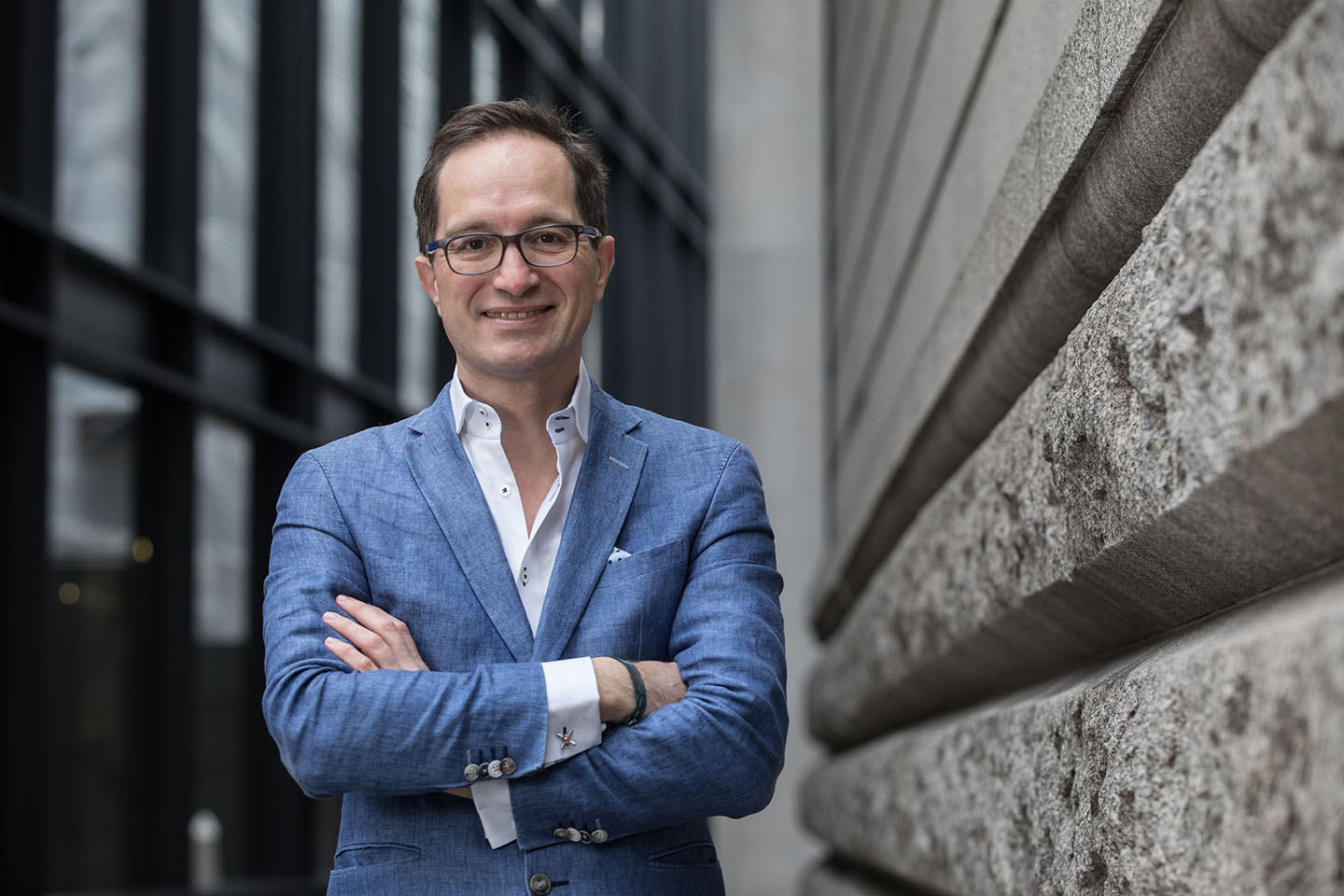
The Disease: The 93/7/0 Split
Here’s what business leaders claim they do: 70% today, 20% tomorrow, 10% day after tomorrow.
Here’s what they actually do: 93%, 7%, 0%.
That gap isn’t a planning failure. It’s an organizational death sentence.
In the “Never Normal”—Hinssen’s term for the permanent state of rapid, unpredictable change—the split should be inverted. You need 70% building the day after tomorrow, not hoarding it. Because when the market shifts (and it always does), the companies that spent 10% on the future are the only ones equipped to move.
The other 90%? Dead. They’re still running yesterday’s playbook.
Why This Happens
Hinssen calls it the “shit of yesterday”—outdated processes, legacy workflows, organizational scar tissue. Companies are so addicted to fixing yesterday that they never get to tomorrow. Marketing is still chasing last month’s metrics. Engineering is still patching systems built in 2015. HR is still hiring for roles that won’t exist next year. Executives wake up in meetings defending decisions made years ago.
And they wonder why they can’t compete with startups that have the luxury of not being burdened by the past.
The Klarna Inflection Point
Swedish fintech Klarna tested this thesis at scale. In 2024, CEO Sebastian Siemiatkowski made a bet: stop hiring humans entirely. Replace the next 700 customer service agents with AI.
By September 2024, Klarna’s AI was handling 66% of all customer service chats across 35 languages—the equivalent output of 700 full-time humans. The company cut 22% of headcount (from 5,000 to 3,800), eliminated hiring, and something unexpected happened:
Profitability went up.
Klarna wasn’t trying to optimize for efficiency. It was executing a Phoenix reinvention. It looked at customer service as yesterwork—the old way—and killed it. Not out of cruelty. Out of mathematical necessity.
That’s the signal Hinssen’s been warning about for years: The first company to fully embrace the day after tomorrow won’t be slightly better than competitors. It will be playing a different sport entirely.
The Framework: The Hourglass Model
Hinssen’s Hourglass Model explains how Phoenix companies bridge vision to action. Most enterprises are 10% top, 90% bottom—spending almost everything running today’s business. Phoenix companies flip it.
The Top (Sense)
This is your “day after tomorrow” lens. You’re not forecasting. You’re sensing—building a radar screen for weak signals, megatrends, and emerging realities. For Klarna, this meant recognizing that customer service wasn’t a cost center. It was a candidate for complete automation.
The Pinch (Experimentation)
The bottleneck where insight meets execution. This is where most companies fail. They sense something big coming, then immediately revert to today’s playbook because “that’s how we’ve always done it.” Klarna didn’t hesitate. It went all-in.
The Bottom (Scale & Run)
Once you’ve validated the future direction, you scale ruthlessly and execute with surgical efficiency. Klarna didn’t pilot its AI strategy. It deployed globally across 23 markets and 35 languages.
The question isn’t whether your company has the Hourglass Model. The question is: How much of your budget lives in the top vs. the bottom?
Why 93% of Companies Are Dead
1. Yesterwork Addiction
Companies are drowning in legacy. Legacy systems, legacy processes, legacy cultures. They’re not evolving. They’re maintaining. Every engineer on a platform rewrite from 2010. Every CMO defending email strategies from 2015. Every VP of Operations defending org charts from 2005.
The cost of yesterday is so high that there’s no oxygen left for tomorrow.
2. Incrementalism Masquerading as Strategy
“We’ll innovate 10% this year,” they say. That’s not innovation. That’s rearranging deck chairs on the Titanic. Hinssen’s point: The day after tomorrow isn’t a 10% improvement. It’s a 10x reframe.
Klarna didn’t improve customer service by 10%. It eliminated the job itself. That’s not optimization. That’s reinvention.
3. The Copilot Delusion
Hinssen has a favorite quote: “Hoping that just by implementing Microsoft Copilot everything is going to become 30% more productive—forget it.”
Companies are treating AI like a productivity tool. Faster spreadsheets. Smarter emails. Incremental gains. That’s the mindset of the dead.
The day after tomorrow companies are asking: What entire functions can AI replace? Not “How can AI help my current team work 10% faster?”
4. The Courage Gap
The most important word in Hinssen’s framework is “urgency.” Companies wait until they’re forced to innovate. But by then, a startup—or a competitor like Klarna—has already eaten their lunch.
Reinvention while things are still going well requires a kind of courage that most boards, investors, and executives don’t possess.
Klarna: The Living Proof
Here’s the uncomfortable truth about Klarna’s AI pivot: It worked.
By December 2025, Siemiatkowski said he felt “gloomy” not because the strategy failed, but because it worked so well that he could see AI replacing his own job within years. He wasn’t being hyperbolic. He was being honest.
| Year | Action | Result |
|---|---|---|
| 2022 | Cut 700 employees. Bet on AI-first CS | Short-term disruption accepted |
| 2024 | AI handles 66% of customer interactions, 35 languages | Profitability up, headcount 5,000 → 3,800 |
| 2025 | Halt all hiring. Let attrition shrink team | CEO publicly acknowledges AI is coming for every job, including his |
That’s a Phoenix company. Not because it succeeded (though it did). But because it accepted extinction and rebuilt before it was inevitable.
The majority of companies are still in the denial phase—hoping that Klarna was an outlier, that “human touch” will always matter, that AI won’t really replace their business. Klarna’s existence is the counter-argument.
From Hinssen’s Theory to the Zero Human Company
Peter Hinssen diagnoses the disease: Companies die because they’re too addicted to today to invest in tomorrow.
Klarna proves the cure exists: Ruthless, binary commitment to the day after tomorrow—killing yesterwork, embracing AI at scale, accepting that the old organization has to burn for the new one to emerge.
But here’s the endpoint that Hinssen hints at but doesn’t fully articulate: If Klarna can replace 700 humans and thrive, what happens when you replace ALL of them?
That’s the Zero Human Company thesis. Not a dystopian thought experiment. A mathematical inevitability. When AI reaches the capability threshold (and it’s coming faster than most boards realize), the question stops being “Should we automate this?” and becomes “Why do we employ humans for this at all?”
The companies that will dominate the next decade won’t be optimizing their human workforce. They’ll be designing organizations that can operate without one.
The question isn’t whether your company will eventually run without humans. It’s whether you’ll be the one deciding when—or whether your competitor will decide for you.
The Never Normal isn’t coming. It’s here. And the 93% who haven’t moved are already breathing smoke.
Further Reading
-
Stanford HAI — AI Index Report
↗
Annual comprehensive AI progress & impact index
-
Anthropic Research
↗
Frontier AI safety & capability research
-
MIT Technology Review — AI
↗
Authoritative AI journalism & analysis
How does your organization score on AI autonomy?
The Zero Human Company Score benchmarks your AI readiness against industry peers. Takes 4 minutes. Boardroom-ready output.
Take the ZHC Score →Get every brief in your inbox
Boardroom-grade AI analysis delivered daily — written for corporate decision-makers.
Choose what you receive — all free:
No spam. Change preferences or unsubscribe anytime.